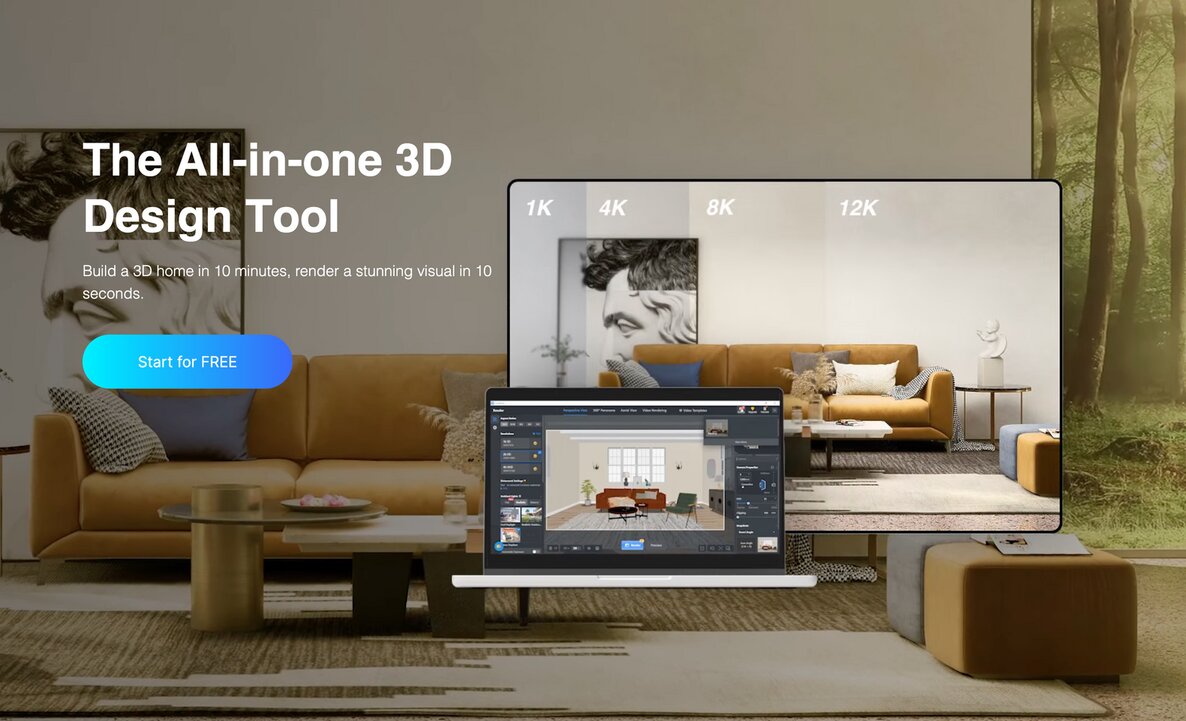
AI is everywhere in today’s conversation, but what does it really change for traditional industries like home and furnishing?
The practical impact is already clear. What used to take 5 days can now take 5 minutes. Store teams can show customers a first home visual while they are still in the showroom. In one rollout, customer retention time increased from just a few minutes to more than half an hour.
In another AI flagship store project, 478 design solutions were generated in 10 days, significantly increasing the store’s capacity to engage customers and drive revenue growth.
AI is not simply making existing processes faster. It is reshaping how home and furnishing businesses attract customers, deliver personalized experiences, and convert demand into growth.
With AI, Customers See and Respond Earlier
|
Before AI
Sales consultants introduced products, gathered customer requirements, and handed floor plans, budgets, and style preferences to the design team. Customers then waited days for a proposal, reviewed the design, requested revisions, and often explored multiple brands before reaching a decision. |
With AI
Customers provide their floor plan and style preferences upfront. During the initial consultation, sales consultants can instantly generate layouts, design concepts, or realistic renderings. Customers engage with ideas immediately, provide more specific feedback, and designers can refine solutions based on real-time preferences, accelerating the path from inspiration to purchase. |

What AI Changes: Visualization, Efficiency, and New Sales Scenarios
01. Visualization Inside the Customer’s Own Space
One of the biggest challenges in home furnishing has always been helping customers visualize the end result.
Traditionally, customers relied on product samples, catalogs, and imagination to understand how a flooring material, cabinet system, or furniture piece might fit into their home. AI changes this dynamic by enabling realistic visualizations within minutes.
Instead of evaluating products in isolation, customers can see how design choices work within their own space and lifestyle. This shortens the gap between interest and confidence.
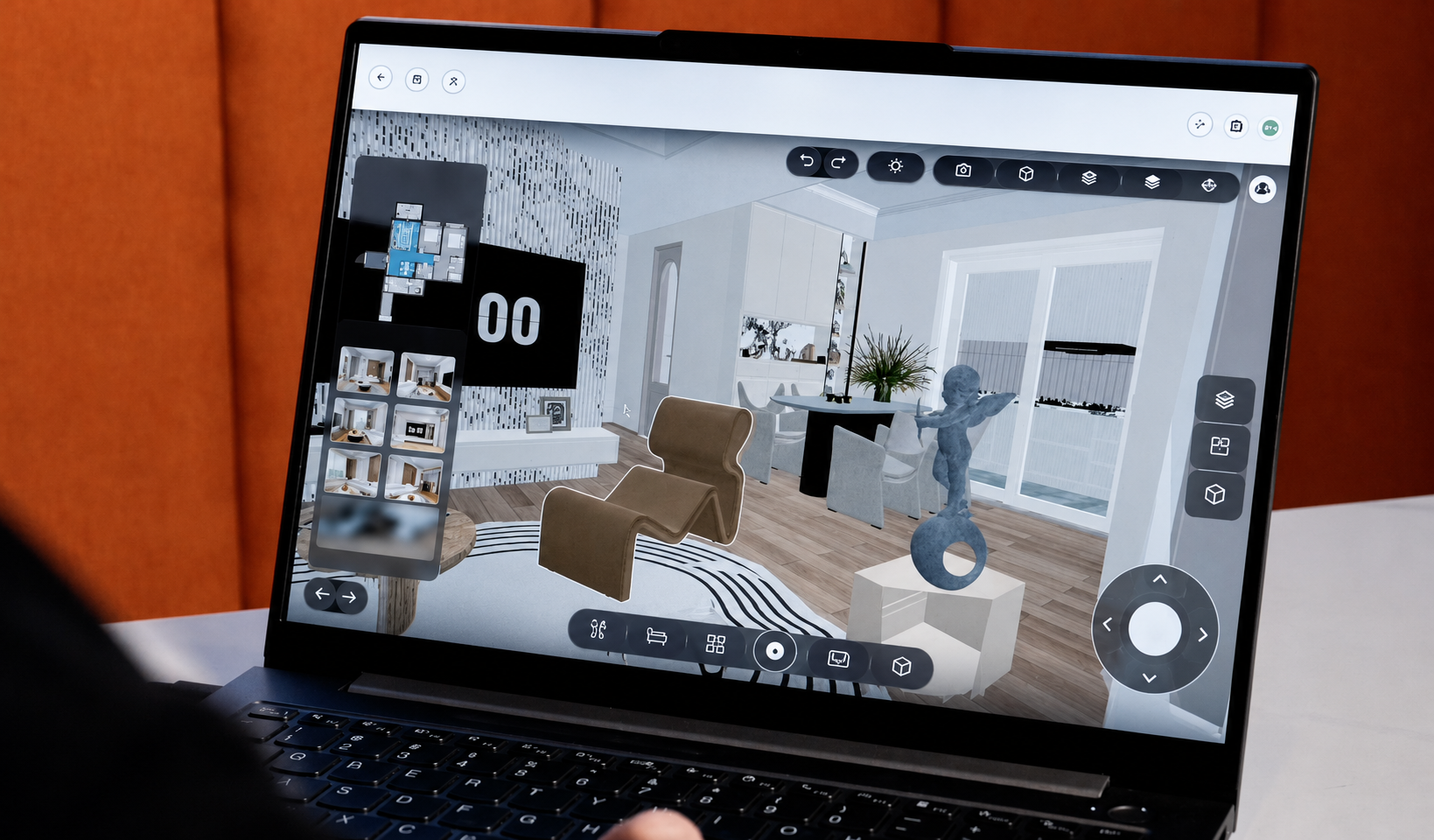
A flooring retailer, for example, used AI generated visualization to help a customer compare options within a realistic home setting. The customer moved from evaluation to deposit during the same interaction. The product did not change; the customer’s ability to visualize the outcome did.
02. Efficiency Across Teams and Workflows
AI is also changing how home furnishing businesses operate behind the scenes.
Many early stage design tasks are repetitive by nature: gathering requirements, creating preliminary layouts, and producing initial visual proposals. By automating much of this work, AI allows teams to focus on activities that require human expertise, such as consultation, creativity, and decision making.
As AI workflows are integrated into daily operations, businesses see improvements across production, order management, and resource planning. In one large scale rollout, AI helped increase material panel utilization by 5% and boosted order processing capacity from just over 20 orders per person per day to 780. The system has since been adopted across more than 100 cities, with strong feedback from both sales consultants and franchise partners.
As AI takes on routine tasks, teams are able to focus their time where it creates the greatest value: serving customers, refining solutions, and driving business growth.
03. New Sales Scenarios Beyond the Showroom
Perhaps the most significant shift is where customer engagement can happen.
Home furnishing sales have traditionally depended on showroom visits and face to face consultations. AI enables businesses to bring visualization into digital channels, allowing customers to explore ideas, review proposals, and make decisions remotely.
For customers with limited time, mobility constraints, or geographic distance, this creates a more accessible buying experience. For businesses, it expands opportunities to engage prospects before, during, and beyond the showroom visit.
From Visual Confidence to Business Impact
The real value of AI in home furnishing is not faster rendering or automated design generation.
It is the ability to reduce uncertainty.
When customers can visualize possibilities earlier, conversations become more productive, decisions happen with greater confidence, and projects move forward more efficiently. At the same time, sales and design teams spend less effort explaining concepts and handling repetitive tasks.
For home and living businesses, the next competitive advantage will not come from offering more products. It will come from helping customers understand the right solution faster, with greater clarity and confidence.
Coohom’s AI Instant and AI Layout are built to support this shift.
From quick layout generation to realistic 3D visualization, Coohom helps teams bring the first visual earlier into the sales journey, reduce repeated explanation, and improve the path from customer interest to confident decision making.
Bring the First Visual Earlier
Explore how Coohom AI can support your design and sales workflow with faster layout generation, realistic visualization, and clearer customer decision making.