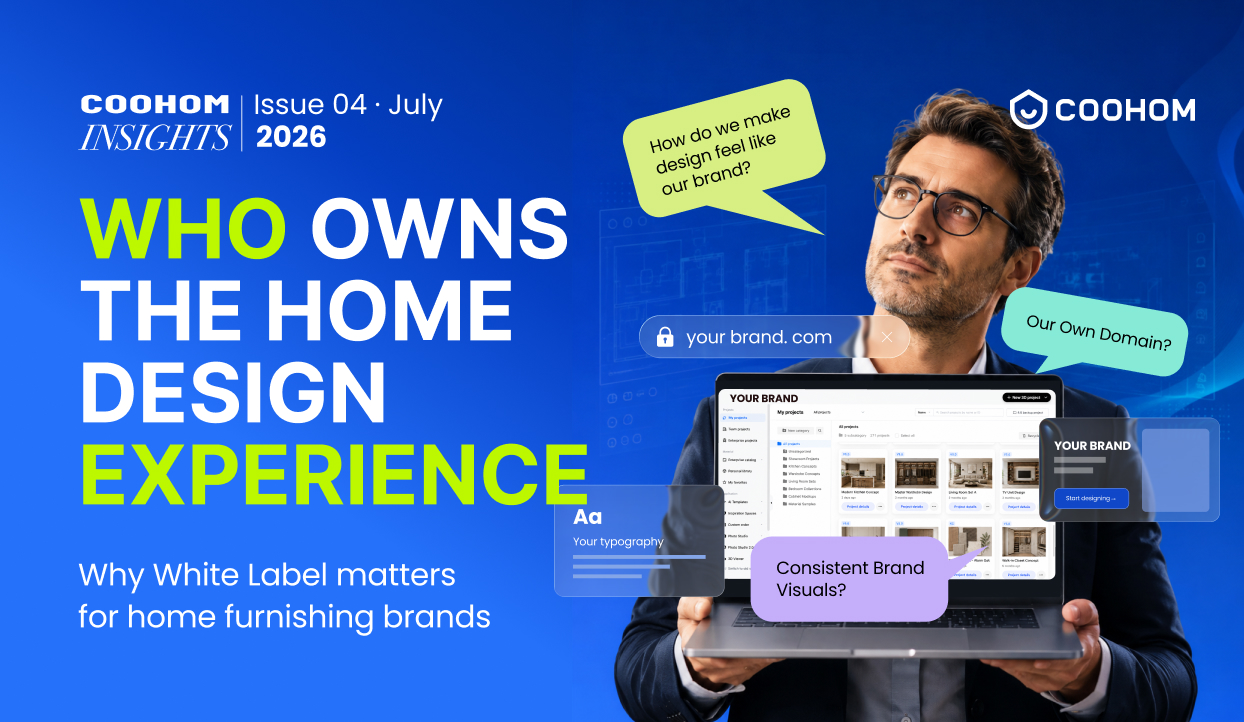
A good 3D design is no longer judged only by how it looks. It is also judged by where customers see it, how they open it, and which brand the experience appears to belong to.
For home furnishing businesses, 3D design used to sit mainly inside the design team. It helped designers build rooms, adjust layouts, and prepare visuals for sales conversations.
Today, that same design experience is moving closer to the customer. A visitor may enter through a design page on a brand website. A showroom consultant may present a visual proposal on screen. A customer may review a panorama from home. A campaign may send traffic directly to an online design experience. A sales team may follow up with renderings, links, or quotation documents.
In each of these moments, customers are not only looking at the design. They are also reading the brand environment around it.
When the Design Leaves the Workspace
Once a design is shared outside the internal workspace, it becomes part of the customer journey.
The rendering may be polished. The proposal may be complete. The room may look realistic. But the surrounding details still shape perception.
What customers notice beyond the design
- Domain: Is the customer entering through the company’s own digital space?
- Page Identity: Does the page name feel like part of the brand experience?
- Visual Identity: Do the logo, watermark, and shared assets reflect the company identity?
- Documents: Do quotations and design files look like official brand materials?
These details may seem small, but together they decide whether the experience feels owned by the brand or borrowed from a third-party platform.
For businesses that invest heavily in showroom experience, product presentation, dealer networks, and customer trust, this matters. A strong design can lose part of its brand impact if the customer-facing experience around it feels disconnected.
White Label Is Not About Changing the Design
White Label does not make the design itself different. It changes how the design is presented, shared, and recognized.
|
Branded Domain
The design experience can open through the company’s own entry point.
|
Company Identity
The page and shared assets can feel aligned with the brand.
|
|
Branded Watermark
Panoramas and renderings can continue to carry brand recognition.
|
Official Documents
Quotations and design files can feel more official and consistent.
|
White Label adds a brand layer around the same 3D capability. The value is not only visual. It is about ownership.
When customers, dealers, or sales teams interact with design content, the experience should feel like it belongs to the business presenting it.
Every Shared Design Becomes a Brand Moment
Home furnishing decisions often move across many touchpoints: website, showroom, dealer portal, marketing campaign, online consultation, and customer follow-up.
If each touchpoint looks separate, the customer experience can feel fragmented. If each touchpoint carries the same brand identity, the design journey feels more connected and professional.
The key idea
Not every customer will notice the technology behind a 3D design experience. But they will notice whether the experience feels trustworthy, consistent, and clearly connected to the brand they are considering.
As 3D design becomes more visible across the buying journey, the question for home furnishing businesses is no longer only how to create better visuals.
It is also how to make those visuals feel unmistakably their own.
Make 3D Design Feel Like Your Brand
Coohom White Label helps home furnishing businesses present 3D design experiences through their own domain, identity, and customer-facing touchpoints.