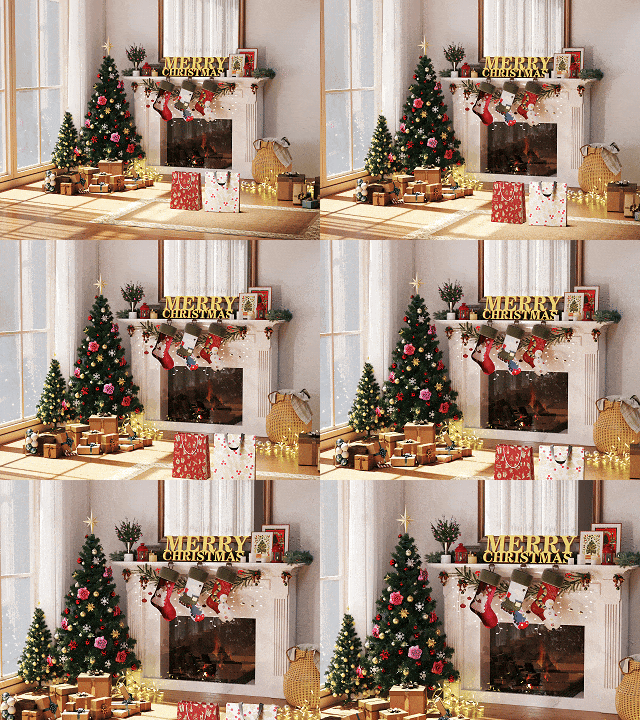
This holiday season, social media abroad has been flooded with one recurring theme: the sustainable Christmas.
Gone are the piles of disposable plastic ornaments. In their place, bloggers are embracing decorations that can be reused, repurposed, and recycled—old sweaters turned into Christmas stockings, recycled paper folded into trees. Thoughtful, beautiful, and waste-free.
Worried that eco-friendly decorating might feel dull or lacking in holiday spirit? Don’t be.
Today, we’re taking inspiration straight from these creators—and using Coohom to turn their zero-waste Christmas ideas into real, livable spaces. Style, sustainability, and reusability—all perfectly balanced.
01 Living Room: Reclaimed Materials, Full Holiday Warmth
A relaxed Christmas—without the waste
The moment you step into this living room, there’s a quiet sense of tenderness that comes from objects given a second life.
The light beige linen sofa is an old favorite, its fabric bearing the gentle marks of time. The vintage wooden coffee table tells its own story—refinished and waxed, its softened edges now feel less like flaws and more like character. Draped across the sofa is a knitted throw once loved, now warmer than ever, as if wrapping the room in memory.
The sustainability details reveal themselves slowly.
Underfoot, a rug woven from recycled cotton blends reclaimed fibers into a nostalgic geometric pattern—soft to the touch, lighter on natural resources. On the coffee table, soy wax candles burn cleanly, without harsh fumes, and their remnants can even be reused as plant fertilizer.
The Christmas décor follows a strict zero-waste logic.
By the window stands a real pine-branch tree, destined after the holidays to become garden compost—no plastic tree to discard this year. Ornaments cost nothing at all: old glass baubles repainted in soft ivory, yarn scraps knitted into star-shaped charms. Even the string lights are low-energy LEDs, consuming just a fifth of the electricity of a standard bulb.
Wrapped in warm, vintage tones, the room feels festive yet grounded—every object carrying the trace of life lived, quietly saving both budget and waste.

02 Bedroom: The Gentle Comfort of Reused Textiles
A soft, sustainable retreat
Here, comfort comes entirely from what already existed.
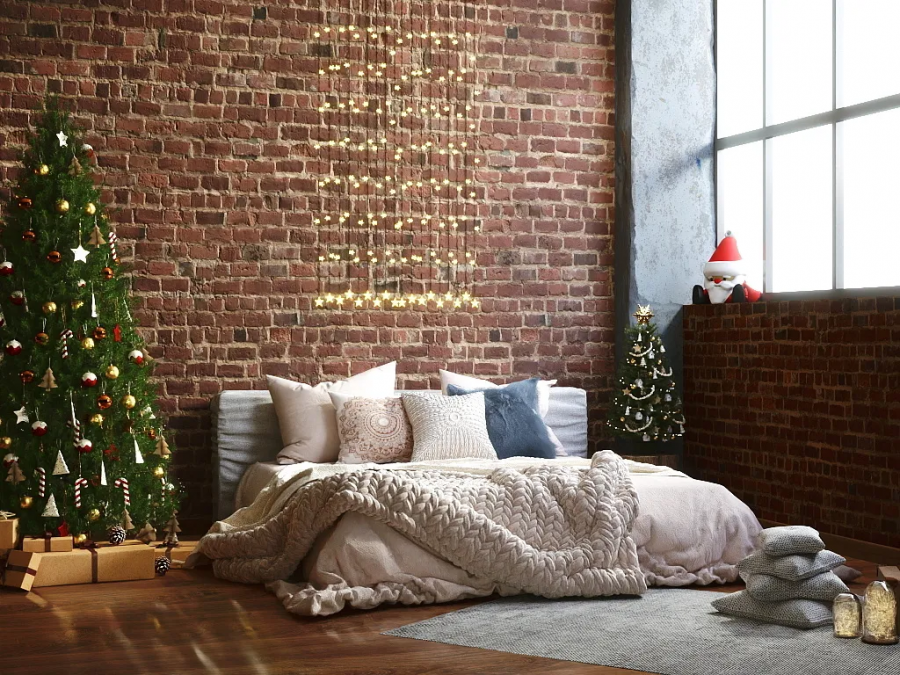
The chunky knitted bedspread was unraveled and re-knit from a misshapen cashmere sweater, its stitches still holding the warmth of its former life. Throw pillows are equally resourceful—plain beige covers cut from old cotton curtains, patterned ones from a retired tablecloth—using nearly three times less material than buying new bedding.
Christmas decorations required no new purchases.
The tree is made from fresh pine branches gathered in a nearby park, ready to return to the soil as organic fertilizer after the season. Ornaments come from painted glass jars, candy canes knitted from leftover yarn, and low-energy LED lights whose entire night’s glow uses less electricity than ten minutes of a traditional bulb.
Even gift wrapping follows the same principle: recycled kraft paper, bows retied from old ribbons, no plastic tape in sight. Once unwrapped, the paper becomes storage bags—proof that even ritual can exist without waste.
Sustainability never overpowers the mood here.
Rough walls, softened fabrics, and warm light create a sweetness that feels deeply human. Without buying anything new, winter becomes gentle, slow, and comforting.

03 Balcony: A Biodegradable Outdoor Winter Nook
A sustainable corner for winter nights
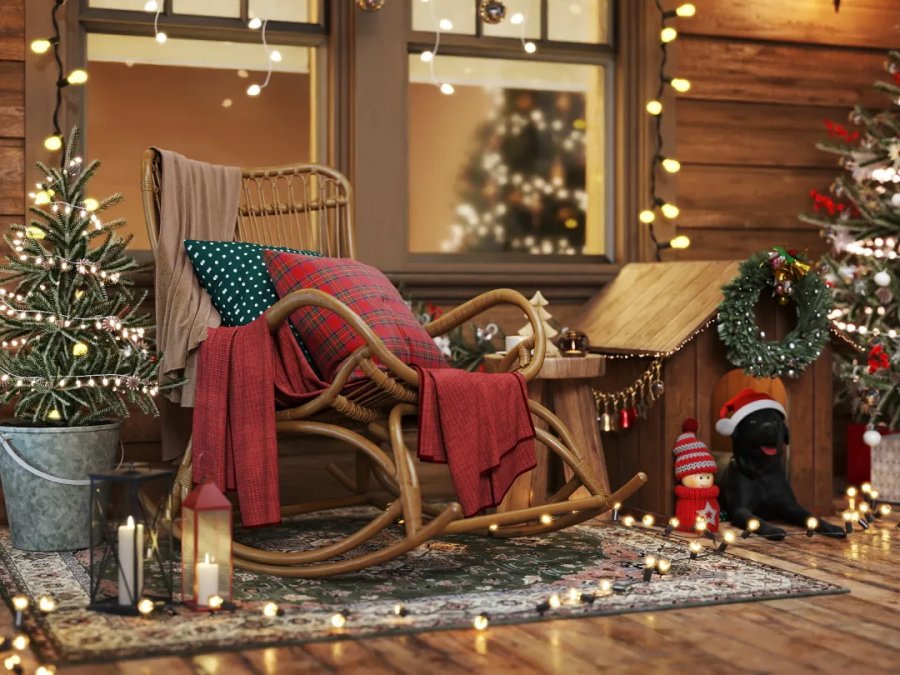
The rattan rocking chair was rescued from storage, once dusty and forgotten. After several coats of natural wax and careful repairs using reclaimed rattan, it now creaks softly with movement—a reminder that old furniture, too, deserves a second life.
Every soft surface comes from reused textiles.
A polka-dot pillow was cut from a pilling cotton shirt, the red plaid one from a flannel bedsheet long tucked away. The red throw draped over the armrest was re-knit from a distorted cashmere scarf. Washed and worn, these fabrics feel warmer than new—each carrying a quiet sense of care.
The Christmas atmosphere relies on nothing disposable.
A small pine-branch tree stands nearby, ready to return to the soil after the holidays. LED string lights glow for weeks on a single set of batteries. A miniature wooden house is crafted from recycled paper, and even the tiny bells are repurposed from old metal keychains.
Nothing here feels forced or performative.
Old objects are respected, sustainability feels effortless, and warm light rocks gently with the chair. It turns out, a relaxed winter atmosphere doesn’t require buying new things—just seeing old ones differently.

A More Thoughtful Christmas
This year, skip the disposable décor.
With Coohom, a sustainable Christmas home isn’t just an idea—it’s a space you can design, visualize, and return to year after year.
Open Coohom and start building your own eco-conscious holiday scene today.