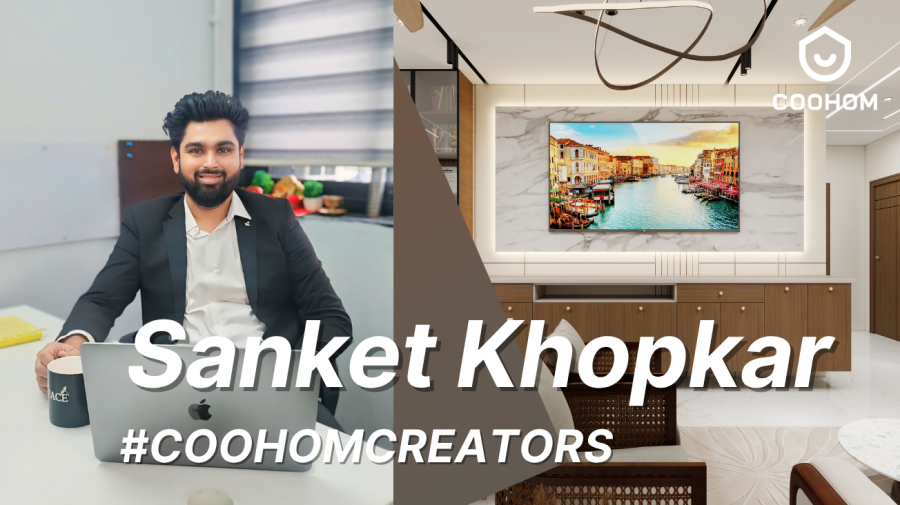
Sanket, 36, did not come from an interior design background. In fact, his journey into the industry began with frustration.
“I faced this issue myself while doing my home interiors,” he says. “Working with contractors was so unpleasant, and that too without proper design and drawings. No one was willing to help me.” That difficult personal experience pushed him to think differently about what interior design services should look like for ordinary homeowners.
In 2022, just after the lockdown period ended, Sanket launched his company—now known as RoomHug Designs—with a clear vision: to make design more transparent, affordable, and useful for people managing their own homes. From the very beginning, he knew the company needed a strong point of difference. “From day 1, only I was clear to have a major differentiation in designs,” he says. And for him, that differentiation started with technology. “We ditched traditional design software and started using Coohom.”
Today, RoomHug is evolving beyond a design studio into a broader design-tech platform for Indian homeowners—one that combines visualization, project support, AI tools, and community-driven resources. But at the center of that journey is still the same belief that drove Sanket in the beginning: good design should reduce confusion, not add to it.
A Different Start in a Traditional Market
The Indian interior design market has long been shaped by fragmented processes, unclear communication, and pricing models that often make quality design inaccessible to average homeowners. Sanket saw those gaps firsthand, and he built RoomHug in response.
He explains that while the company’s earlier name changed because of trademark issues, the deeper shift was towards a larger mission: RoomHug Designs aims to build a self-driven project community by offering free tools such as BOQ, a savings calculator, a quick AI color changer, design ideas, and direct factory connections.
That vision goes beyond design delivery. Sanket and his team are also building their own AI-powered project management tool, LoopReview, to reduce revision chaos and improve project communication. “This tool treats every design project as a sprint,” he says. Through voice-to-text feedback, AI-assisted writing, automatic checklists, and an “AI scope checker” that classifies revisions into minor, major, or redesign requests, the goal is to remove the confusion that often overwhelms both designers and clients. “This helps to inform each and every detail to the client and also avoid miscommunication, which is a very big problem in this industry,” Sanket says.
Even though RoomHug is a design company, Sanket emphasizes that it already has “an in-house team of 2 developers and a CTO.” His long-term ambition is bold: “My vision is to be the leading design+tech+community platform for Indian homeowners doing their project themselves or getting help with contractors.”
Why He Chose Coohom from Day One
For many design firms, adopting a new platform happens gradually. For Sanket, it was a foundational decision.
“From day 1, only we started using Coohom. No other software was allowed to be used,” he says. This was not a small choice in a market where many designers were still trained on traditional tools. In fact, Sanket recalls that hiring became harder because of that decision. “As a firm owner, I decided we would only work on Coohom… many candidates rejected us,” he says. “And after 30–40 interviews, we found 2 good designers who were willing to start from scratch and learn Coohom.”
The learning process was far from easy. “When we learnt Coohom, we learnt from a Chinese subtitles video,” he says. But despite the language barrier, the team stayed committed. Those first designers reached a professional level in roughly two months. What mattered to Sanket was not short-term convenience, but building a design workflow that could truly stand apart from the market.
That decision shaped the company’s culture. Sanket notes that several designers who later left the company to start their own businesses still continue using Coohom. “Most of them are doing their own business and not jobs, and they use Coohom only to win their clients,” he says.
The Moment He Realized Coohom Was a Game Changer
For Sanket, the turning point did not come from a single software feature. It came from how customers reacted.
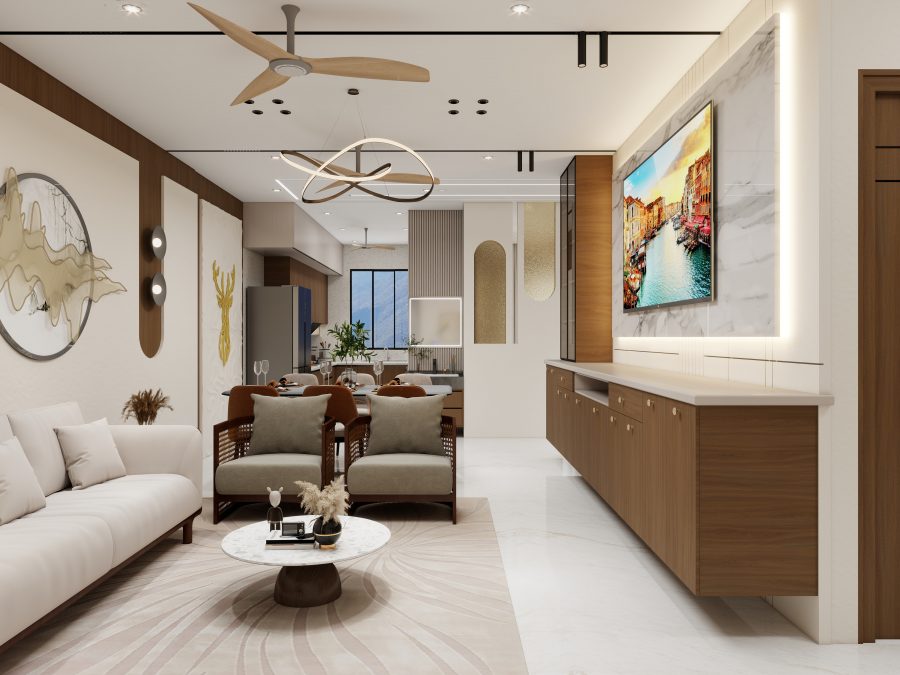
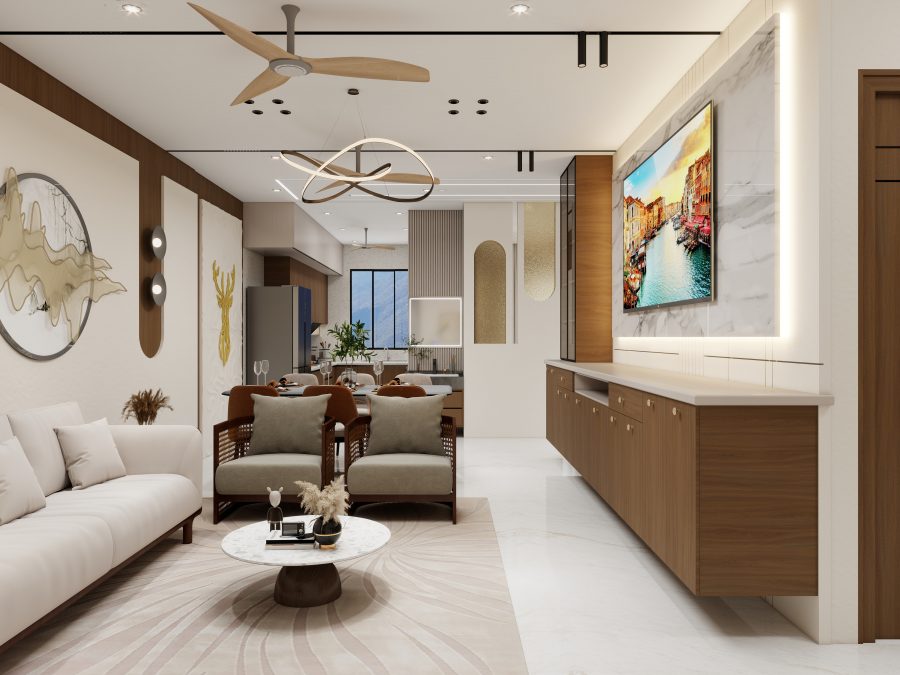
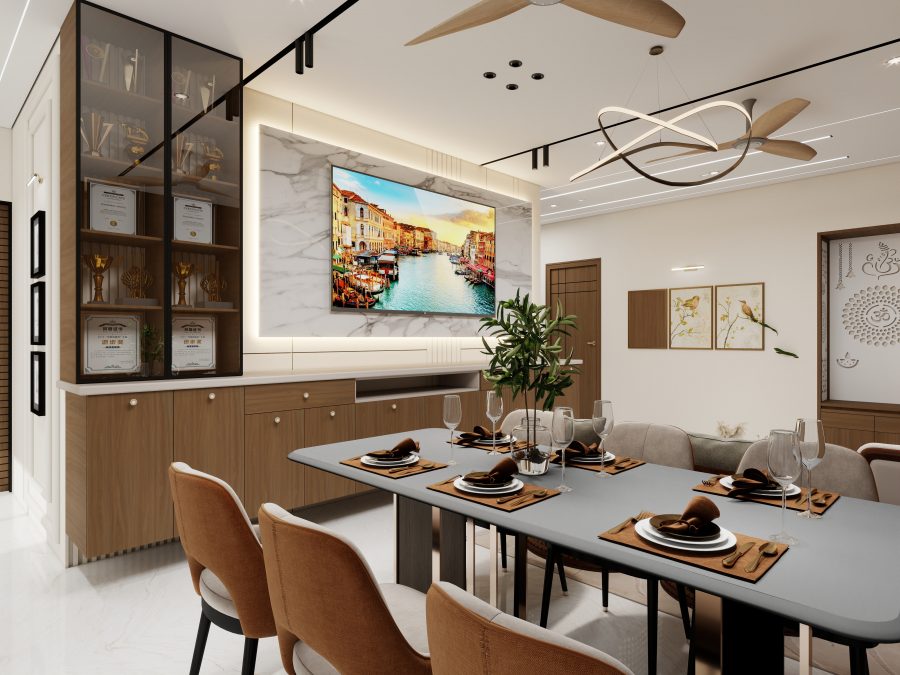
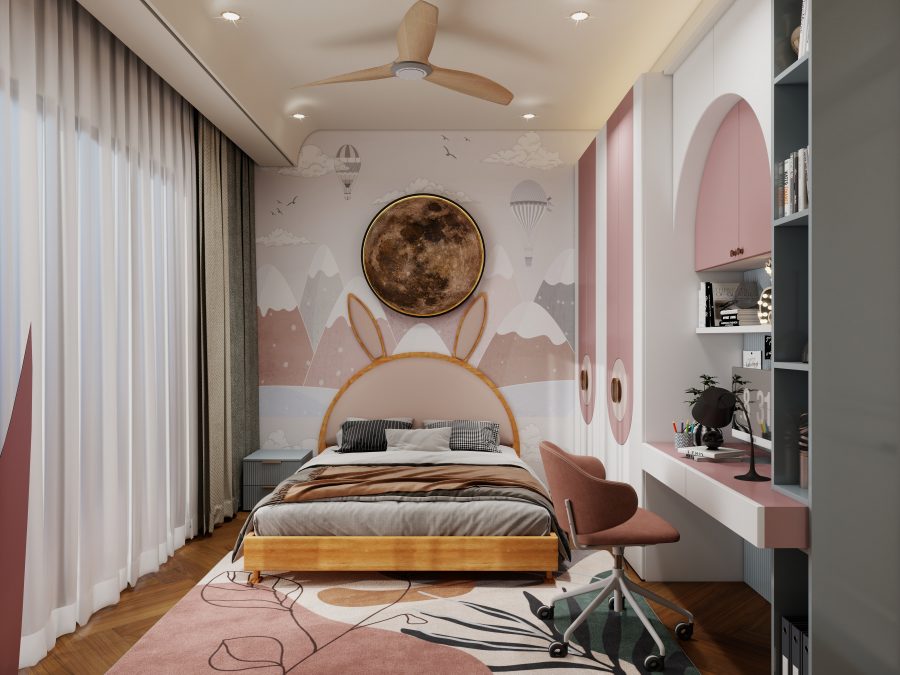
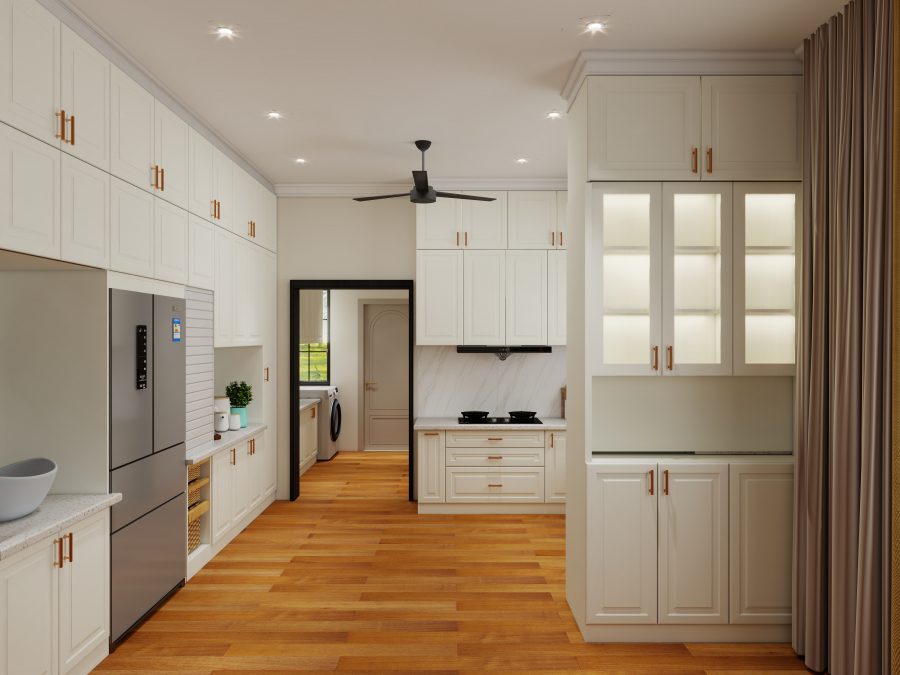
“Aha moment was when every customer of ours, when we asked why they selected us over other cheap designers or expensive studios, told us that our quality of work and the quality of designs really stood out,” he says. “They like 4K designs, and many thought it was after execution photos and not 3D designs due to the outstanding quality of Coohom designs.”
That reaction revealed something important: visual quality was not just an aesthetic advantage. It was a business differentiator.
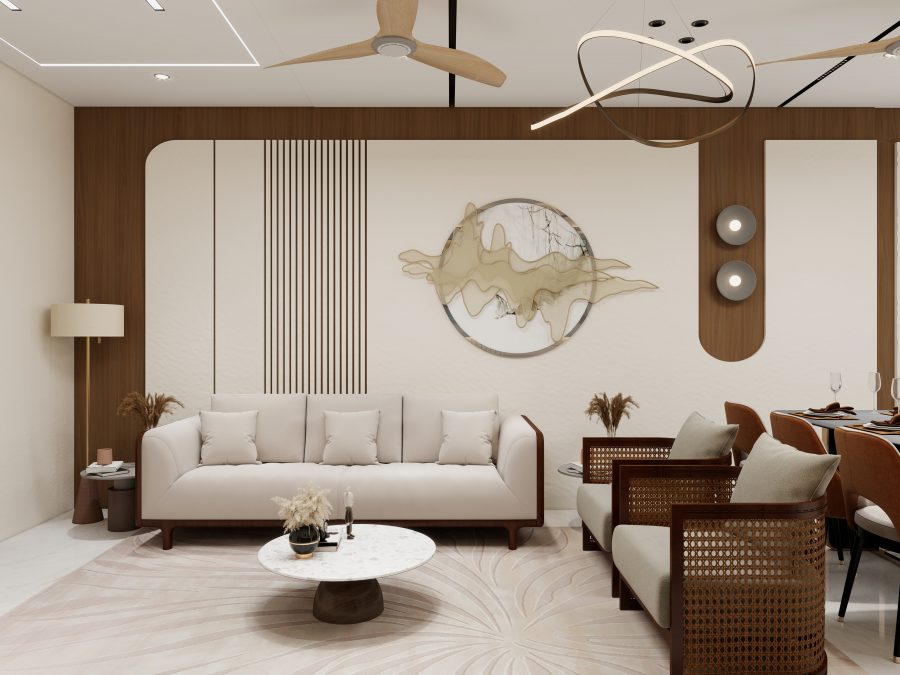
Sanket also points to walkthroughs as one of the strongest reasons RoomHug began winning more projects, especially in B2B scenarios. “Walkthrough has been a game-changer for us to get B2B clients as well,” he says. Later, he adds that B2B customers specifically told them that “they win client projects by showing walkthroughs. It acts as a differentiator from other designers.
For homeowners in particular, this type of visualization helps bridge a long-standing communication gap. Instead of asking clients to imagine a design from 2D drawings or verbal explanations, RoomHug could show them something immersive and emotionally convincing. In a market where trust is often fragile, that kind of clarity matters.
Making Good Design More Affordable
One of the most compelling parts of Sanket’s story is that Coohom did not just improve visual output—it helped change the economics of the business.
He explains that before RoomHug entered the market, design fees in India were often tied directly to the time and labor required for rendering. Charges were typically calculated per square foot, with drawings billed separately and walkthroughs often priced as an expensive add-on. “Walkthrough was unheard of for the interior design industry in India, and if someone was providing it, it was at per-second charges, going thousands of rupees, not affordable for the Indian homeowners,” Sanket says.
RoomHug took a different approach. “We were amongst the first ones in the Indian market to offer designs, drawings, and walkthroughs all at a fixed per-room price,” he says. Instead of following the traditional billing structure, RoomHug offered one-room pricing in the range of INR 8,000–10,000 per room—roughly half of what the market was charging. “All this was possible only because of Coohom Technology,” he says.
That statement is perhaps the strongest testimonial in the entire case. Sanket puts it plainly: “It would not be wrong on my part to say our company exists just because Coohom was developed and we greatly owe to the team.”
In other words, Coohom did not simply help RoomHug work faster. It made RoomHug’s pricing model—and therefore its market positioning—possible.
From Design Pain Points to Platform Thinking
As RoomHug grew, Sanket began to see that solving the design problem alone was not enough. Low-cost, high-quality design brought in volume, but with that volume came a new challenge: communication.
“When we started offering projects at these low rates and were still profitable, we got many projects doing 20–25 projects per month,” he says. “This tool we developed to address our pain points of WhatsApp and email communication, and problems faced in revisions and project management.”
That insight led directly to LoopReview. In Sanket’s ideal workflow, Coohom handles the visual and design side, while LoopReview manages the revision logic, communication structure, and project sprint tracking around it. The two are not separate ideas, but part of the same philosophy: design should be clear, trackable, and accessible.
He believes this will become increasingly important for Indian homeowners who want more autonomy over their own projects. “In the future, our tool will have project management features also, where DIY home doers can easily manage their project themselves or hire a project consultant from our side,” he says.
This is where Sanket’s story becomes bigger than a software success story. It becomes a story about how one entrepreneur used design technology to begin rethinking an entire service ecosystem.
Bridging Design and Execution
Sanket is also realistic about where the industry still needs to improve. While Coohom has helped RoomHug raise design quality, speed, and affordability, converting those high-end visuals into consistent on-site execution remains an ongoing challenge.
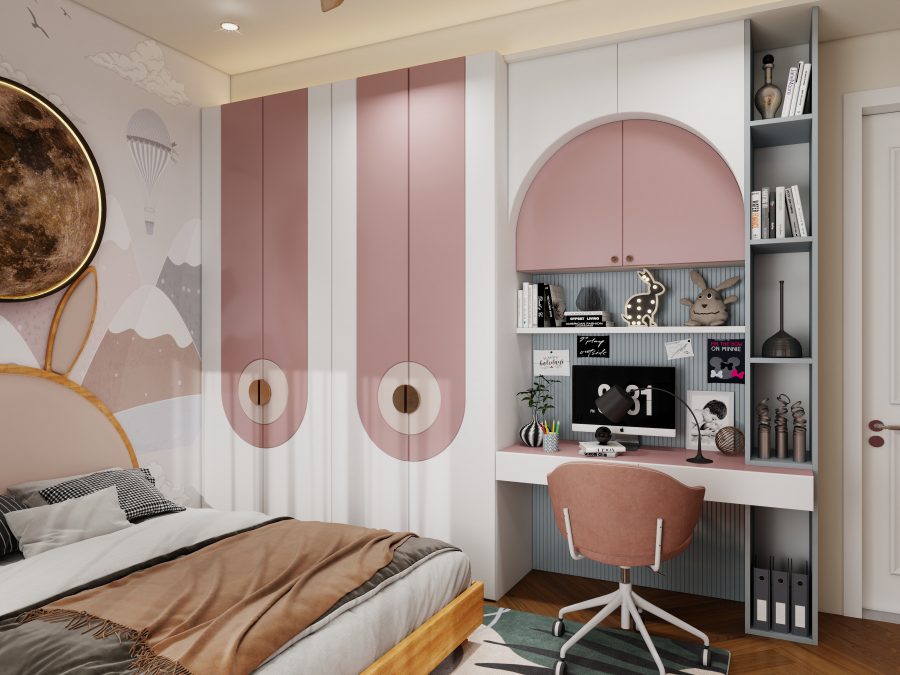
He says, “In converting high-end design with the help of local contractors, we are still working on it.” But he also points to one practical bridge that already helps: “One thing that helps this contractor a lot is in-depth working drawings that we provide.”
He also offers a valuable local market insight. “The Indian market is moving towards less execution on site, more modular, and many people want to have minimal furniture but maximum home decor, lights, and wall highlights,” he says. Based on that shift, he believes there is an opportunity for more localized design resources inside global platforms. “If Coohom can incorporate the catalogue of popular Indian home decor and lighting companies, it will help Indian designers and companies like us more,” he adds.
The comment reflects both appreciation and ambition. Sanket clearly sees Coohom as a critical enabler, but also as a platform that can continue to evolve alongside regional markets like India.
Looking Ahead
What makes Sanket’s journey especially compelling is that it started not from formal design training, but from a homeowner’s frustration. That experience gave him a practical lens on the industry: people do not just need beautiful images—they need confidence, clarity, and a system they can trust.
From launching RoomHug after a difficult personal renovation experience, to training designers on Coohom through Chinese-subtitled videos, to reshaping pricing in the Indian market, Sanket has built his company around a simple but powerful belief: technology should make design better for both businesses and homeowners.
And for him, Coohom has been central to that transformation.
“From day 1, only we started using Coohom,” he says. Looking back at RoomHug’s growth, that decision now reads not just as a software preference, but as the starting point of an entirely new business model.